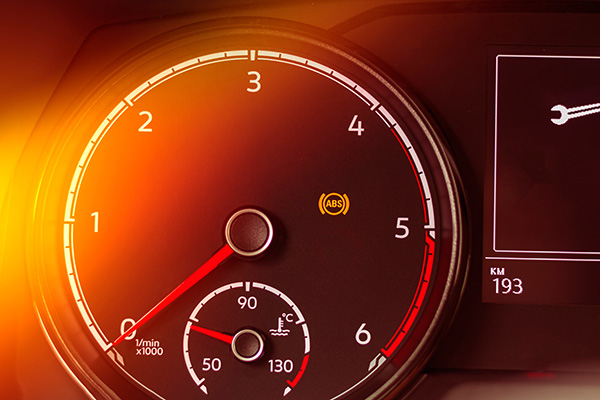
Seeing the ABS and traction control lights appear at the same time can make it seem like two separate systems failed at once. In many cases, though, both warnings are reacting to the same problem.
ABS and traction control share wheel-speed information and several electronic components. If the computer loses a reliable signal from one wheel or detects a fault in the braking system, it can disable both functions until the problem is repaired. The basic brakes can still work, but the electronic assistance you depend on during hard braking or wheel slip might not.
A Wheel Speed Sensor Is a Common Starting Point
Each wheel has a speed sensor that tells the ABS computer how quickly that wheel is turning. The system compares those readings constantly. If one wheel suddenly reports a speed that does not match the others, the computer has to decide whether the tire is actually slipping or the signal itself is wrong.
A failing sensor can create an intermittent warning that comes and goes as you drive. Sometimes the lights appear immediately after startup. Other times, everything looks normal until you reach a certain speed or hit a rough section of road. When we inspect this type of problem, live wheel-speed data is one of the first things we compare.
The Sensor Wiring Can Fail Even When the Sensor Is Good
The sensor is only useful if its signal reaches the control module. Wiring near the wheels lives in a rough environment where it deals with water, road debris, steering movement, suspension travel, and vibration.
A wire can break internally while the insulation still looks fine from the outside. Connectors can also corrode or loosen. We often move the harness while watching scan data because a connection that works with the car sitting still can drop out when the wheel turns or the suspension moves. Replacing the sensor would not fix that kind of wiring problem.
Wheel Bearings Can Affect the ABS Signal
On many vehicles, the wheel-speed sensor reads a magnetic encoder or tone ring that is part of the wheel bearing or hub assembly. If the bearing becomes loose or the magnetic surface is damaged, the sensor may receive an irregular signal even though the sensor itself still works.
You might notice a humming or growling noise at the same time, but not every bad bearing is noisy yet. Rust or debris around the sensor mounting area can also change the air gap enough to affect the reading. One thing we check is whether the signal drops out at the same wheel where we find bearing play or damage around the encoder.
Low Battery Voltage Can Turn Several Lights On
ABS and traction control systems depend on stable electrical voltage. A weak battery, charging problem, poor ground, or voltage drop during startup can make control modules shut down or store communication faults.
This can be especially confusing when several dashboard lights come on together and then disappear after restarting the vehicle. We check battery condition and charging voltage before digging into expensive electronic parts. A weak electrical supply can make healthy modules look unreliable.
Brake System Problems Can Trigger Both Warnings
The ABS is tied directly into the hydraulic brakes so that certain brake problems can affect traction control too. Low brake fluid, pressure sensor faults, hydraulic pump problems, or an internal ABS unit issue can trigger warning lights.
Pay attention to the brake pedal. If the red brake warning light is also on, the fluid is low, or the pedal feels soft or unusually low, that deserves faster attention than a warning light by itself. An inspection should cover the hydraulic system along with the electronic fault codes so a brake problem is not mistaken for a sensor issue.
Tires and Alignment Can Confuse Wheel-Speed Readings
The ABS computer expects the tires to rotate at predictable speeds relative to one another. A tire that is much smaller, badly underinflated, heavily worn, or mismatched can rotate differently enough to create problems on some vehicles.
We also look at recent tire, wheel, suspension, and alignment work. If the warnings started right after a tire replacement or a hard curb impact, that history helps. Regular maintenance should include checking tire pressure and tread condition because something as basic as a tire problem can sometimes create electronic symptoms that look much more complicated.
Why the Trouble Code Is Only the Beginning
A scan tool can tell us which system reported the fault and often which wheel is involved. It does not always tell us which part to replace. A left-front wheel-speed code could come from the sensor, wiring, connector, bearing encoder, module input, or even excessive movement at the hub.
We compare the code with live data, electrical tests, wiring condition, and what the vehicle is doing on the road. That keeps the repair focused. Clearing the warning lights without fixing the cause only resets the clock until the system sees the same bad information again.
Get ABS And Traction Control Diagnostics In Issaquah, WA, With Autoworks Of Issaquah
If your ABS and traction control lights have come on together, Autoworks Of Issaquah in Issaquah, WA, can check the wheel-speed signals, wiring, bearings, battery voltage, and brake system to find where the fault begins.
Schedule a visit and find out why both systems switched off before the warning becomes an everyday part of your dashboard.