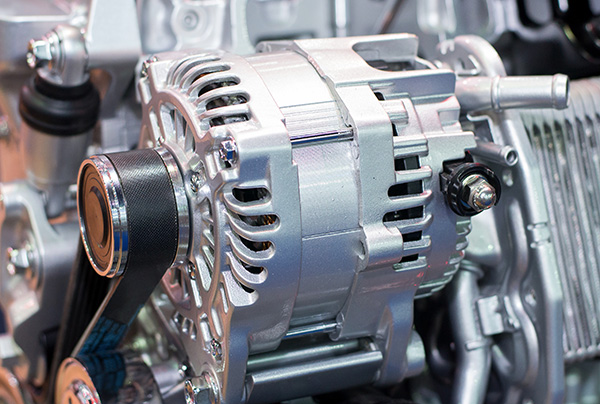
An alternator problem can sometimes catch you off guard because it can come out of nowhere. The car starts, the engine runs, and you assume the battery is handling things the way it always has. Then the lights get a little dimmer, the dashboard does something odd, or the car suddenly feels less steady electrically than it did a few days ago.
That is usually the point where the charging system is already falling behind.
What The Alternator Is Supposed To Do
Once the engine starts, the alternator takes over the job of supplying power to the vehicle and recharging the battery. That means your lights, ignition system, fuel system, blower motor, electronics, and charging system all depend on it working properly while the engine is running. The battery starts the car. The alternator keeps it alive after that.
That is why a bad alternator can fool people at first. The car may still crank and start because the battery has enough reserve left. The real trouble begins after startup, when the vehicle keeps drawing power but is no longer getting enough of it back.
The Early Signs Sometimes Start Small
A failing alternator can show up through weird electrical behavior before the car actually shuts down. Headlights dim at idle, the blower motor may slow down, or power windows may move more sluggishly than usual. Some drivers notice the battery light first. Others notice that the radio resets, the dash flickers, or the car feels slightly weaker electrically when they are stopped in traffic.
Those little symptoms are easy to dismiss because they do not always happen all at once. Still, they are exactly the kind of clues that should not be ignored. Once the voltage starts dropping, the car begins shedding normal behavior one system at a time.
Warning Signs That Mean The Alternator Is Failing
A few symptoms usually point strongly toward a charging system problem:
- The battery or charging light comes on
- Headlights or interior lights start dimming
- The blower motor changes speed on its own
- Power windows move more slowly than normal
- The radio, screen, or dash starts glitching
- The car needs a jump more than once
One symptom by itself is worth paying attention to. Several at once usually mean the alternator is no longer keeping up.
When You Should Stop Driving
This is the part drivers really need to hear. If the battery light is on and the car is showing dim lights, electrical glitches, or signs of voltage loss, you should not assume you have plenty of time left. The alternator has most probably failed already, and the car will stall wherever the battery finally runs out.
You should stop driving as soon as it is safe if:
- The battery light is on, and the lights are dimming
- The car starts losing electrical functions while running
- The dash flickers or warning lights multiply
- The engine begins running rough because the voltage is dropping
- The steering feels heavier on a vehicle with electric assist
At that point, you are no longer deciding whether the car has a problem. You are deciding whether it dies in your driveway or in traffic.
Why Waiting Makes It Riskier
Driving with a failed alternator can leave you stalled in an intersection, on the highway shoulder, or far from home with a dead battery and a car that will not restart. Even worse, some drivers mistake the symptoms for a battery problem, replace the battery, and end up right back in the same situation because the real issue was the charging all along.
What A Proper Charging System Check Should Include
A real charging system inspection should go beyond whether the car starts. Battery condition, alternator output, belt condition, cable connections, and voltage behavior under load all need to be checked together. That is what tells you whether the alternator itself is failing, whether the belt is slipping, or whether another charging system problem is causing the same symptoms.
We tell drivers the same thing here: if the car is acting electrically strange, do not wait for it to prove the point by shutting off. Charging problems are much easier to deal with before the battery is fully drained and the vehicle is stranded.
Get Charging System Repair In Issaquah, WA, With Autoworks Of Issaquah
If your battery light is on, your lights are dimming, or your car is starting to lose electrical power while driving, Autoworks Of Issaquah in Issaquah, WA, will perform an inspection to determine whether the alternator has failed before the car leaves you stranded.
Bring it in early, or stop driving and call us if the symptoms are already getting worse.